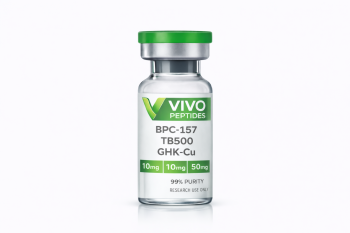
GHK-Cu Overview
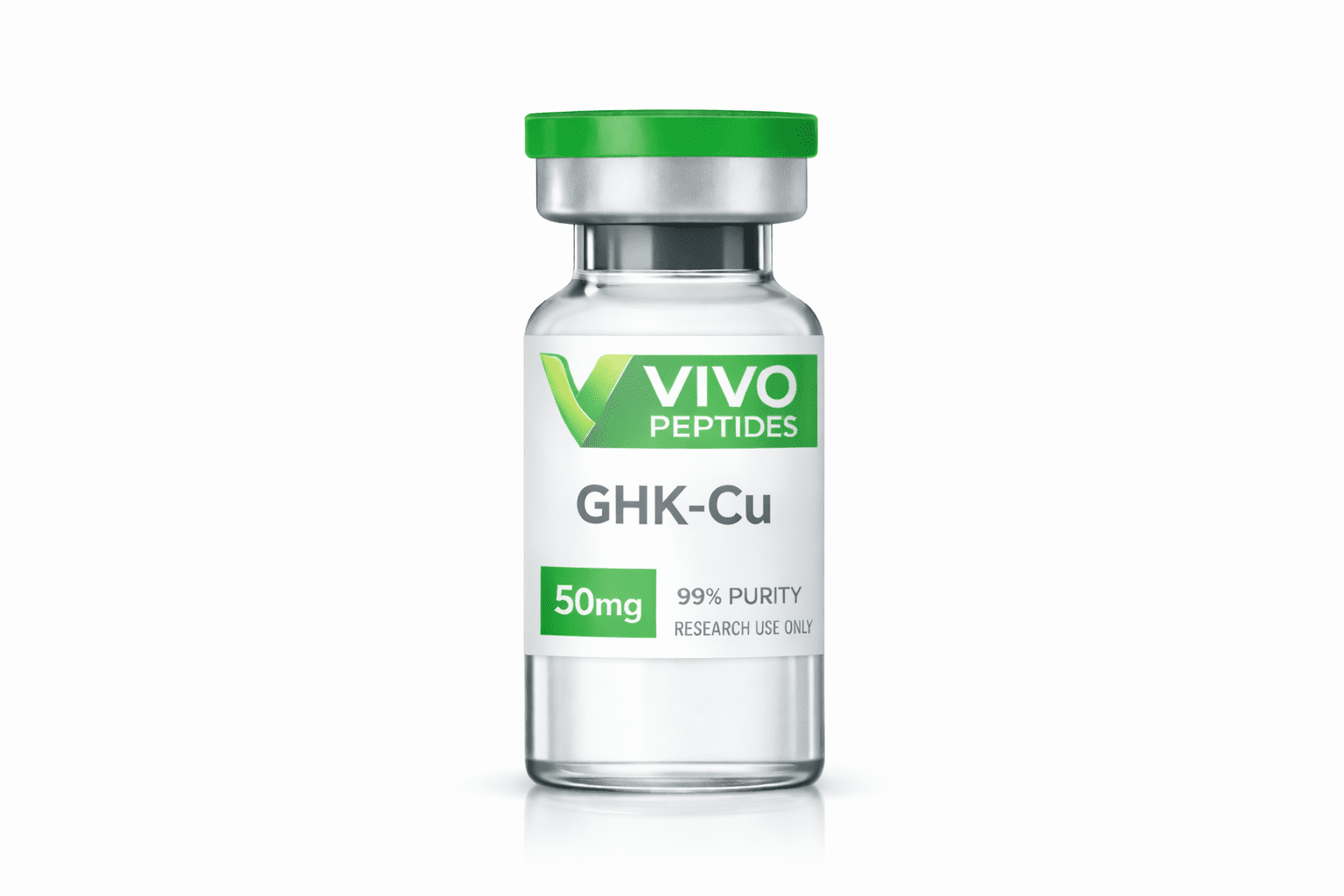
GHK-Cu (Glycyl-L-Histidyl-L-Lysine) is a bioactive peptide complex characterized by its high affinity for copper ions (Cu2+). Originally isolated from human plasma, it serves as a critical signaling molecule that declines with age.
This peptide is engineered to investigate the modulation of metalloproteinases and the stimulation of structural proteins, aiming to address cellular repair mechanisms through trace element delivery rather than hormonal pathways.
Regeneration and Tissue Research
Scientific literature has extensively focused on GHK-Cu’s potential to promote collagen and elastin production, accelerate wound closure, and exhibit potent anti-inflammatory effects in various tissue models.
Because copper is a vital cofactor for key enzymes like lysyl oxidase (involved in collagen cross-linking), GHK-Cu is frequently discussed as a distinct category in studies concerning skin health, hair follicle size, and scar tissue remodeling compared to standard growth factors.
Status and Safety Note
GHK-Cu is a research chemical widely used in laboratory settings, so claims should be framed as “investigational” and avoid implying approved cosmetic or therapeutic use for humans.
As with all bioactive peptides, marketing text should avoid instructions for personal application, dosing, or administration and should stay strictly within research-description boundaries.
Frequently Asked Questions About GHK-Cu
What is GHK-Cu?
GHK-Cu is a copper-binding tripeptide (Gly-His-Lys) that naturally occurs in human plasma. It serves as a key subject in research studying tissue remodeling, collagen synthesis signaling, and anti-inflammatory pathways.
What purity level is your GHK-Cu?
Our research-grade GHK-Cu is USA-manufactured with >99% purity, verified through third-party HPLC and mass spectrometry testing. COA available upon request.
What vial sizes are available for GHK-Cu?
We offer GHK-Cu in multiple research dosages to accommodate different experimental scales and laboratory protocol requirements.
How should GHK-Cu be stored?
Store lyophilized GHK-Cu at -20°C to -80°C for long-term storage. Once reconstituted with bacteriostatic water, store at 2-8°C and use within 28 days for optimal stability.
How do you reconstitute GHK-Cu?
For standard research concentrations, add bacteriostatic water slowly along the vial wall. Swirl gently without shaking until the blue powder is fully dissolved. Allow 2-5 minutes for complete reconstitution.
How does GHK-Cu differ from other peptides?
Unlike hormonal peptides, GHK-Cu functions primarily by delivering copper ions to cells and modulating gene expression related to repair. Its unique mechanism makes it a staple in regenerative and dermatological research rather than metabolic studies.
What makes GHK-Cu unique in research?
GHK-Cu’s ability to reset gene expression to a healthier state and its high safety profile allow researchers to study fundamental repair processes, including stem cell recovery and DNA repair mechanisms.
What research applications utilize GHK-Cu?
GHK-Cu is used in wound healing models, anti-aging and skin regeneration studies, hair growth research, anti-inflammatory investigations, and studies on extracellular matrix remodeling.
Is GHK-Cu stable after reconstitution?
When reconstituted with bacteriostatic water and stored at 2-8°C, GHK-Cu maintains stability for up to 28 days. Protect from direct light and avoid repeated freeze-thaw cycles.
Can GHK-Cu be shipped internationally?
Yes, we offer international shipping for research institutions. GHK-Cu is stable in lyophilized form and is shipped with appropriate packaging to ensure integrity during transit.