
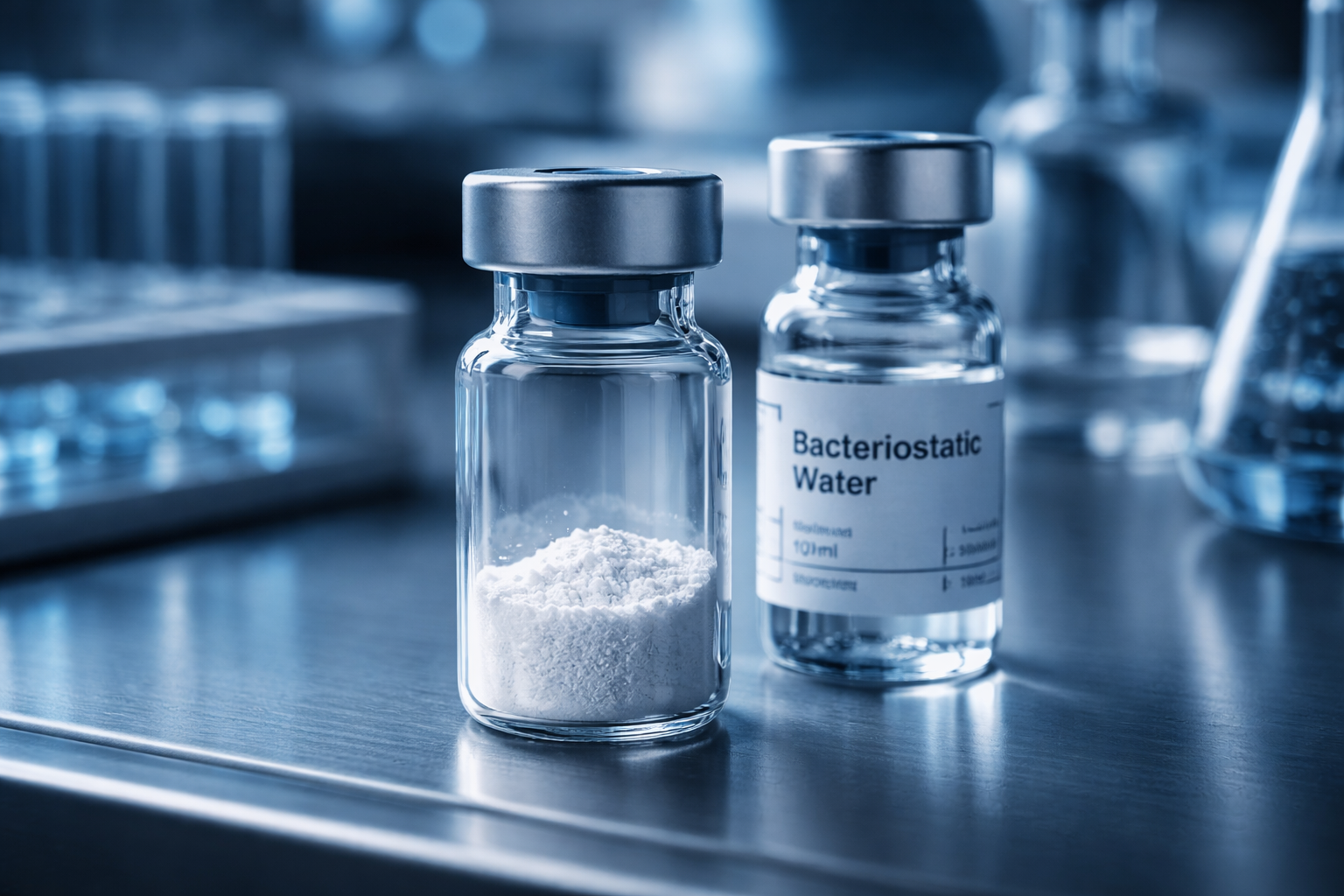
Peptide reconstitution is a critical laboratory procedure for any researcher handling lyophilized peptides. Proper reconstitution protocols ensure maximum potency, stability, and chemical integrity of research materials like BPC-157, Semaglutide, or Tirzepatide. This comprehensive guide covers everything from selecting the appropriate solvent to calculating solution concentrations, plus proper storage protocols to maintain peptide stability.
Key Takeaways: Stability Reference Matrix
| State | Storage Condition | Estimated Stability Duration |
|---|---|---|
| Lyophilized (Powder) | Freezer (-20°C) | 24 – 36 Months |
| Lyophilized (Powder) | Room Temp (Dark) | 30 – 90 Days (Stable) |
| Reconstituted (Liquid) | Refrigerator (2-8°C) | 14 – 30 Days (Peptide Dependent) |
| Reconstituted (Liquid) | Freezer | NOT RECOMMENDED (Structural Damage Risk) |
Proper storage is the single most critical factor in maintaining the purity and efficacy of research peptides. Unlike stable organic compounds, peptides are fragile amino acid chains prone to degradation via hydrolysis and oxidation. This guide outlines the laboratory standards for handling lyophilized and reconstituted peptides.
1. Handling Lyophilized Peptides
Most research peptides arrive in a lyophilized (freeze-dried) state. This process removes water to ensure stability during transport. Upon receipt, the vials should be stored immediately in a freezer at -20°C if not intended for immediate research.
Critical Step: Before opening a vial that has been stored in the freezer, allow it to reach room temperature naturally (approx. 20-30 minutes). Opening a cold vial introduces condensation (moisture) from the air, which can prematurely degrade the peptide.
2. The Reconstitution Protocol
Reconstitution requires a bacteriostatic solvent to prevent bacterial growth. The standard in research settings is Bacteriostatic Water (0.9% Benzyl Alcohol).
- Step 1: Swab the vial stopper with an alcohol pad to ensure a sterile surface.
- Step 2: Slowly dispense the bacteriostatic water down the side of the glass vial. Do not dispense directly onto the powder “puck” to avoid damaging the peptide bonds.
- Step 3: Gently swirl the vial to dissolve. Never shake a peptide vial. Shaking creates micro-bubbles and shear stress that can denature the amino acid chain.
3. Storage of Reconstituted Peptides
Once mixed with a solvent, the stability window begins to close. Reconstituted peptides must be kept refrigerated at 2°C to 8°C. They should never be refrozen, as the freeze-thaw cycle of water crystals will destroy the molecular structure.
Summary of Degradation Factors
Researchers must protect peptides from three primary enemies:
- Light (UV Radiation): Breaks down chemical bonds. Always store in dark areas.
- Heat: Accelerates chemical reactions and bacterial growth.
- Agitation: Physical stress breaks fragile peptide chains.
