
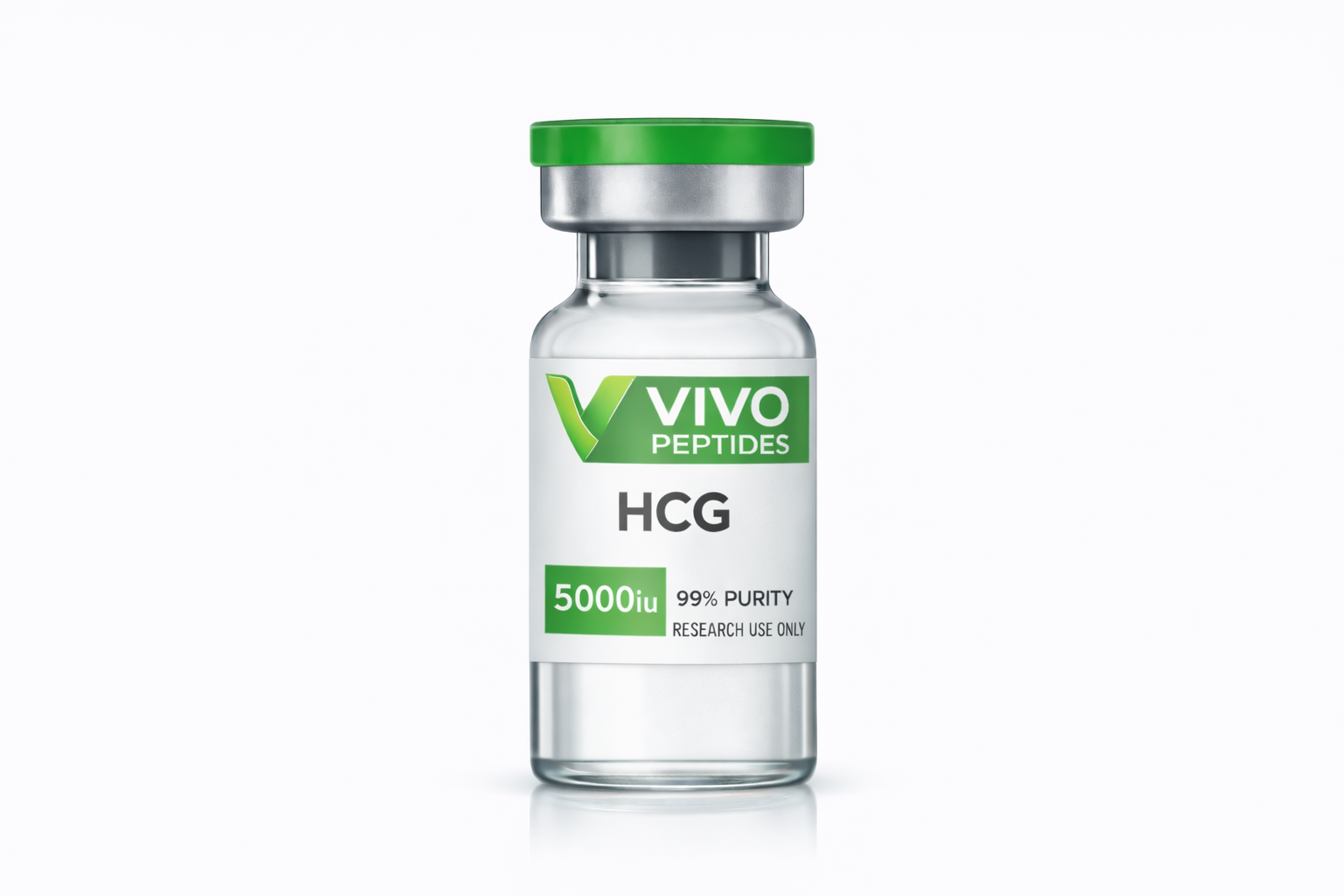
HCG 5000IU
$70.00 (USD)
Human Chorionic Gonadotropin (HCG) is a peptide hormone primarily produced by the placenta during pregnancy. It plays a vital role in supporting fetal development by stimulating the production of essential hormones such as progesterone, helping maintain a healthy pregnancy.
In research settings, HCG is studied for its potential effects on hormonal regulation, metabolic processes, and physiological responses.
Storage & Handling:
To maintain the stability and integrity of this product, store it in a cool, dry place, away from direct sunlight. Handle with care and follow standard laboratory procedures to ensure accurate and reliable results.
Human chorionic gonadotropin (HCG) is a naturally occurring hormone-a glycoprotein, to be precise-best known for its use in reproduction and broad hormone regulation. Structurally, it is very similar to luteinizing hormone (LH).
Because of this similarity, HCG peptides can stimulate the production of testosterone in males, enable ovulation in females, and assist in the regulation of hormone balance. It’s used widely by clinicians and researchers to study fertility, diagnose hypogonadism, and study hormone-based treatments both in clinical practice and research settings. Now, it is possible to buy hcg 5000 iu online, but only for research purposes.
What is HCG?
Human chorionic gonadotropin (HCG) is a glycoprotein hormone with two components-alpha and beta-the beta component giving it its biological specificity. Because of its structural similarity to luteinizing hormone (LH), HCG also acts on LH receptors in the testes and ovaries and triggers the release of sex hormones. There are very high levels of production of HCG by the placenta during pregnancy, but this hormone is not merely important in obstetrics.
In males, HCG imitates LH on testicular Leydig cells to stimulate and maintain endogenous testosterone production, even during or after anabolic steroid use. In women, it is used in assisted reproduction for ovulation induction, regularization of cycle, and luteal support. As a result of these regulatory effects on the production of sex hormones, HCG is widely used in clinical and laboratory applications for fertility restoration, hormone replacement treatment, and more widespread endocrine modification.
Chemical Structure of HCG
HCG is a heterodimeric glycoprotein of molecular weight ~ 37.9 kDa, approximately ~30% carbohydrate content by weight. It consists of two subunits:
Alpha subunit (α): 92 amino acids, same α unit shared by LH, FSH, and TSH as well as HCG.
Berta subunit (β): 145 amino acids, with an added distinctive 24-residue C-terminal peptide (CTP) which increases its half-life.
Glycosylation: There are a total of eight carbohydrate chains-two N-linked on the α subunit, and on the β subunit two N-linked, and four O-linked-which add stability and bioavailability.
Cystine-knot motif: Three disulfide bonds in each subunit form a rigid tertiary structure, a conformation that is essential for high-affinity receptor binding.
How does it work?
Human chorionic gonadotropin (HCG) preserves endocrine balance. In males, it mimics luteinizing hormone (LH) in stimulating endogenous testosterone production, inducing spermatogenesis, and preserving testicular size and function in the setting of hormonal suppression-sustaining overall endocrine balance. In females, it is used in fertility therapy to induce ovulation, treat the menstrual cycle, and support corpus luteum (luteal) function.
Here’s how it works: NCG binds to LH receptors in the gonads and promotes the synthesis of sex-steroids-testosterone in males and estrogen/progesterone in females. Because it acts along the hypothalamic-pituitary-gonadal (HPG) axis, HCG can stimulate hormone production directly even when the upstream signals are low. That’s why it’s usually used when hormone suppression or replacement is needed, and recovery of fertility is desired.
Unique Features
Unlike peptides that are used mainly to control growth hormone or metabolism, HCG has a direct effect on the endocrine reproductive system. Its dual use in male and female models and established safety and efficacy, have made it a frequent focus area of study in fertility, endocrinology, and hormone optimization. Want to order hcg online?
Related Products
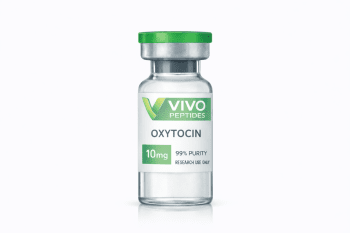
Oxytocin is a nonapeptide hormone naturally produced in the hypothalamus and released by the posterior pituitary.
In research settings, it is widely utilized to investigate the neurobiological mechanisms of social bonding, stress regulation, trust, and maternal behaviors, as well as its physiological role in uterine contraction and lactation.
Note: This product is intended for research use only and is not for human consumption.
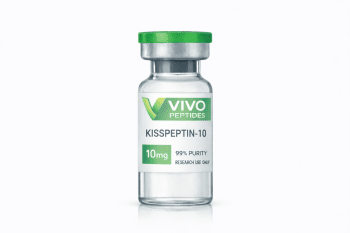
Kisspeptin-10 is a synthetic peptide comprising the bioactive C-terminal decapeptide sequence of the endogenous protein Kisspeptin (metastin).
In research settings, it is a critical tool for investigating the neuroendocrine regulation of the reproductive axis, specifically its ability to stimulate the pulsatile secretion of Gonadotropin-Releasing Hormone (GnRH) via activation of the GPR54 (Kiss1) receptor.
Note: This product is intended for research use only and is not for human consumption.
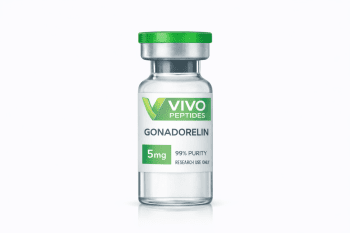
Gonadorelin is a synthetic decapeptide identical to the endogenous Gonadotropin-Releasing Hormone (GnRH).
In research settings, it is utilized to stimulate the anterior pituitary gland to secrete Luteinizing Hormone (LH) and Follicle-Stimulating Hormone (FSH), making it a fundamental tool for investigating the hypothalamic-pituitary-gonadal (HPG) axis, pulsatile hormone regulation, and fertility mechanisms.
Note: This product is intended for research use only and is not for human consumption.
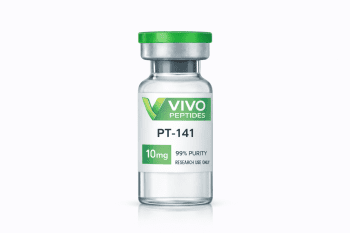
PT-141 (Bremelanotide) is a synthetic cyclic peptide described as an α‑MSH analog and a melanocortin receptor agonist investigated in research models of central melanocortin signaling.
In published preclinical literature, PT-141 is discussed in the context of CNS-mediated melanocortin activity and neurobehavioral endpoints, including sexual-function–related research models.
Disclaimer: All products are intended for laboratory and research use only and are not for human or veterinary consumption.
