
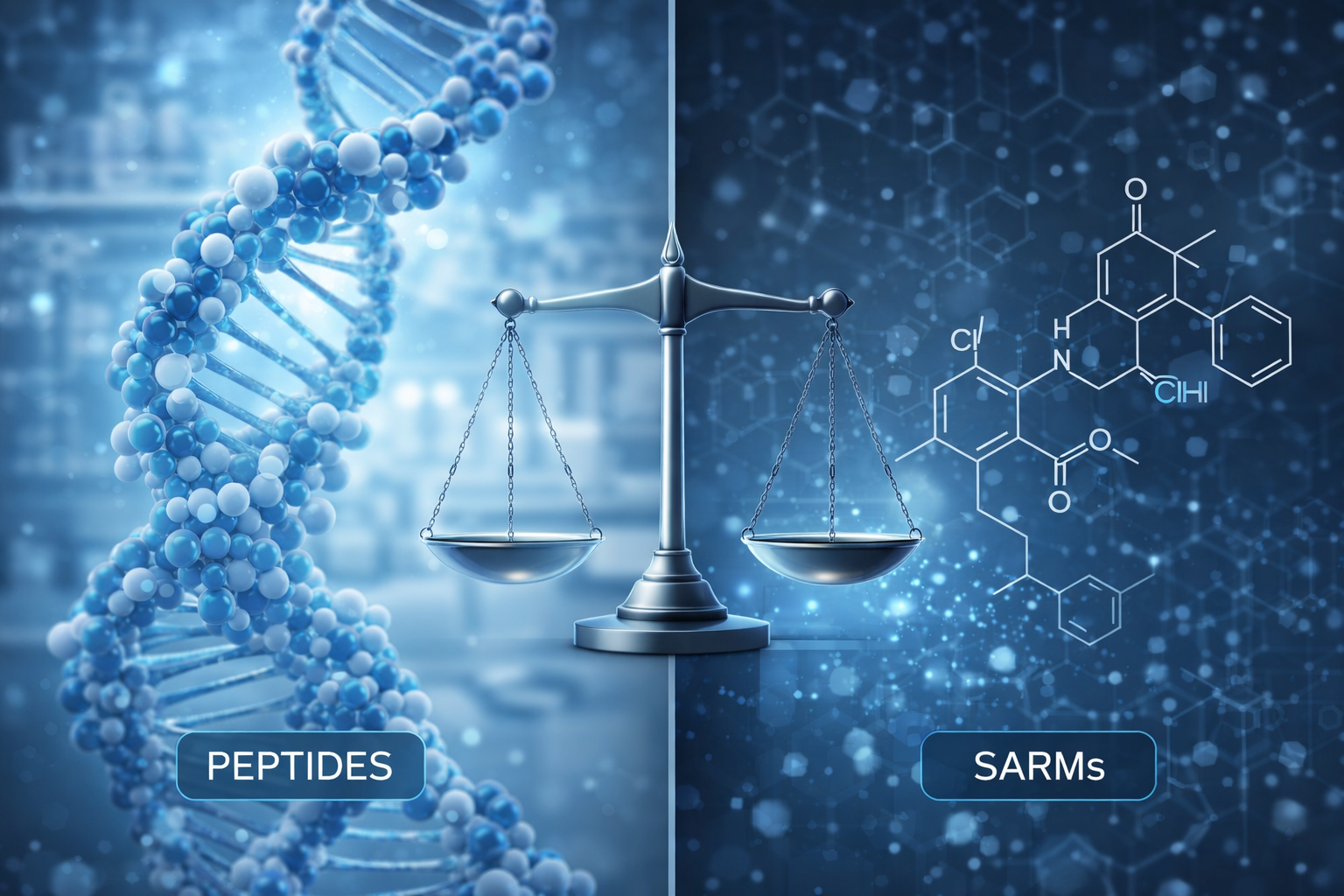
Peptides vs SARMs is one of the most debated topics in modern performance research. While both compounds influence muscle and tissue growth, they operate through fundamentally different biological mechanisms. This guide breaks down everything you need to know.
Head-to-Head Comparison Table
| Feature | Peptides (e.g., GHRP-6, BPC-157) | SARMs (e.g., Ostarine, LGD-4033) |
|---|---|---|
| Origin | Biological (Amino Acid Chains) | Synthetic (Non-steroidal chemicals) |
| Mechanism | Signaling (HGH release, healing) | Androgen Receptor Binding |
| Systemic Impact | Broad (depends on peptide type) | Tissue Selective (Muscle/Bone) |
| Research Status | Widely used in mainstream medicine | Investigational / Not FDA Approved |
Defining the Distinct Classes
Peptides vs SARMs is a common debate in research circles. While often grouped together in “performance research” discussions, Peptides and Selective Androgen Receptor Modulators (SARMs) operate on fundamentally different biological pathways.
1. Peptides: The Signaling Messengers
Peptides are short chains of amino acids that naturally occur in the body. When introduced exogenously in a research setting, they act as keys to unlock specific functions. For example, GHRH peptides signal the pituitary gland to release growth hormone. They do not alter DNA or androgen receptors directly; they simply amplify existing biological signals.
2. SARMs: Selective Receptor Binding
SARMs are synthetic ligands designed to mimic the effects of testosterone but with “tissue selectivity.” Unlike anabolic steroids which affect all organs (including the prostate and heart), SARMs attempt to target only skeletal muscle and bone tissue. However, they suppress the natural endocrine axis (HPTA), which peptides generally do not do.
Research Application Differences
- Peptides are typically researched for: Injury repair (BPC-157), anti-aging, and metabolic health.
- SARMs are typically researched for: Muscle wasting diseases (cachexia) and osteoporosis.
Safety Profile in Literature
Current literature suggests that peptides have a higher safety profile due to their biological nature. SARMs, being synthetic compounds, have shown greater strain on liver values (hepatotoxicity) in various clinical trials.
Frequently Asked Questions About Peptides vs SARMs
What is the main difference between Peptides vs SARMs?
The primary difference lies in their origin and mechanism. Peptides are short chains of amino acids that mimic natural signaling molecules in the body (like growth hormone release), promoting natural biological processes. In contrast, SARMs (Selective Androgen Receptor Modulators) are synthetic chemicals designed to bind specifically to androgen receptors in muscle and bone tissue, mimicking the effects of testosterone without the full range of steroid side effects.
Are Peptides safer than SARMs for research?
Generally, peptides are considered to have a more favorable safety profile in research settings because they are biological in nature and break down into amino acids. SARMs, being synthetic ligands, often present more harsh systemic effects and hormonal suppression in test subjects. When comparing Peptides vs SARMs, peptides like BPC-157 or TB-500 are often cited for their healing properties with minimal side effects, whereas SARMs are strictly for performance enhancement research.
Which is better for muscle growth: Peptides or SARMs?
In terms of raw anabolic potential, SARMs (like LGD-4033 or RAD-140) typically show stronger muscle-building results in research trials compared to most peptides. However, peptides like CJC-1295 and Ipamorelin are highly effective for long-term growth hormone optimization and recovery. The choice in the Peptides vs SARMs debate depends on the research goal: rapid tissue accrual (SARMs) versus holistic recovery and anti-aging (Peptides).
Can Peptides and SARMs be used together in research?
Yes, synergistic research is common. A popular protocol involves combining a healing peptide (like BPC-157) with a SARM to mitigate potential joint stress caused by rapid muscle growth. Understanding the distinct mechanisms of Peptides vs SARMs allows researchers to design protocols that maximize benefits while attempting to minimize toxicity.
Is post-cycle therapy (PCT) required for Peptides vs SARMs?
Most peptides (like BPC-157, Ipamorelin, or GHK-Cu) do not require a Post Cycle Therapy (PCT) because they do not suppress the body’s natural testosterone production. They work by signaling specific pathways rather than flooding androgen receptors. In contrast, SARMs almost always require a proper PCT protocol because they can suppress natural hormone levels, especially at higher research dosages. This is a critical safety distinction when evaluating Peptides vs SARMs for any experimental protocol.
