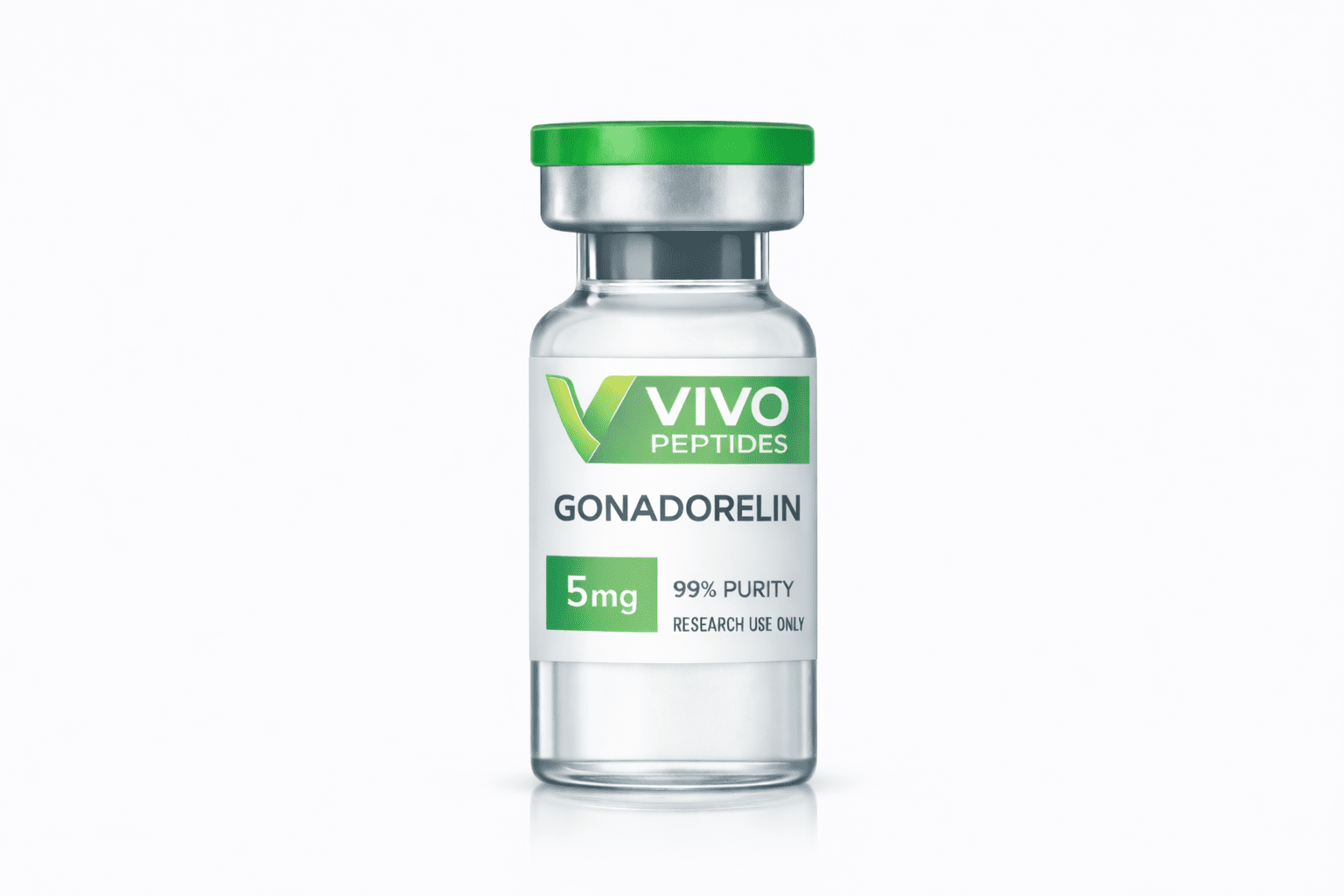
Gonadorelin (also known as GnRH or LHRH) is chemically identical to the natural hormone produced by the hypothalamus. Unlike potent synthetic analogs (like Triptorelin or Leuprolide) which have long half-lives and can cause receptor desensitization (chemical castration) with continuous use, Gonadorelin has a very short half-life (minutes). This characteristic allows researchers to mimic the body’s natural pulsatile release of hormones.
Scientific studies employ Gonadorelin to test the responsiveness of the pituitary gland and to induce spermatogenesis or ovulation in models of hypogonadotropic hypogonadism. By administering the peptide in controlled pulses, researchers can restore or stimulate the natural production of testosterone and sperm without permanently suppressing the HPG axis, a common issue with long-acting analogs.
Product Specifications:
-
Sequence: pGlu-His-Trp-Ser-Tyr-Gly-Leu-Arg-Pro-Gly-NH2
-
Molecular Formula: C55H75N17O13
-
Molecular Weight: 1182.3 g/mol
-
CAS Number: 33515-09-2 (Gonadorelin acetate often cited as 71447-49-9)
-
Purity: ≥99% (HPLC)
-
Form: Lyophilized White Powder
Storage & Handling:
Lyophilized Gonadorelin is stable at room temperature for short periods but should be stored at -20°C for long-term preservation. Upon reconstitution with bacteriostatic water, the peptide is relatively stable if kept refrigerated (2-8°C) and should be used within 3-4 weeks. Due to its rapid enzymatic degradation in biological systems, proper handling during experimental procedures is critical.
Disclaimer:
All products listed on this website, including Gonadorelin, are for laboratory research purposes only. They are not intended for use as drugs, food additives, or cosmetic products. This product is not approved by the FDA for human use and should not be ingested or administered to humans or animals.
FAQ
What is the difference between Gonadorelin and Triptorelin?
Gonadorelin has a very short half-life (~4-10 minutes) and mimics natural GnRH, stimulating LH/FSH release when given in pulses. Triptorelin is a synthetic “super-agonist” with a long half-life that, after an initial spike, causes receptor downregulation and shuts down LH/FSH production (used for chemical castration research).
Why is “pulsatile” administration important in research?
Continuous exposure to GnRH causes the pituitary receptors to desensitize and stop producing hormones. To stimulate sustained testosterone or sperm production in research models, Gonadorelin must often be administered in pulses (e.g., every 90 minutes) to mimic the hypothalamus’s natural rhythm.
Does Gonadorelin increase Testosterone?
In research models with functioning pituitary and testes, the administration of Gonadorelin triggers the release of LH, which signals the Leydig cells in the testes to produce testosterone. It is often used to test if the HPG axis is intact.
Is this peptide stable in solution?
Gonadorelin is moderately stable in bacteriostatic water when refrigerated. Studies suggest it remains stable for at least 30-45 days at 4°C, but freezing the solution after reconstitution is generally not recommended if it can be avoided.