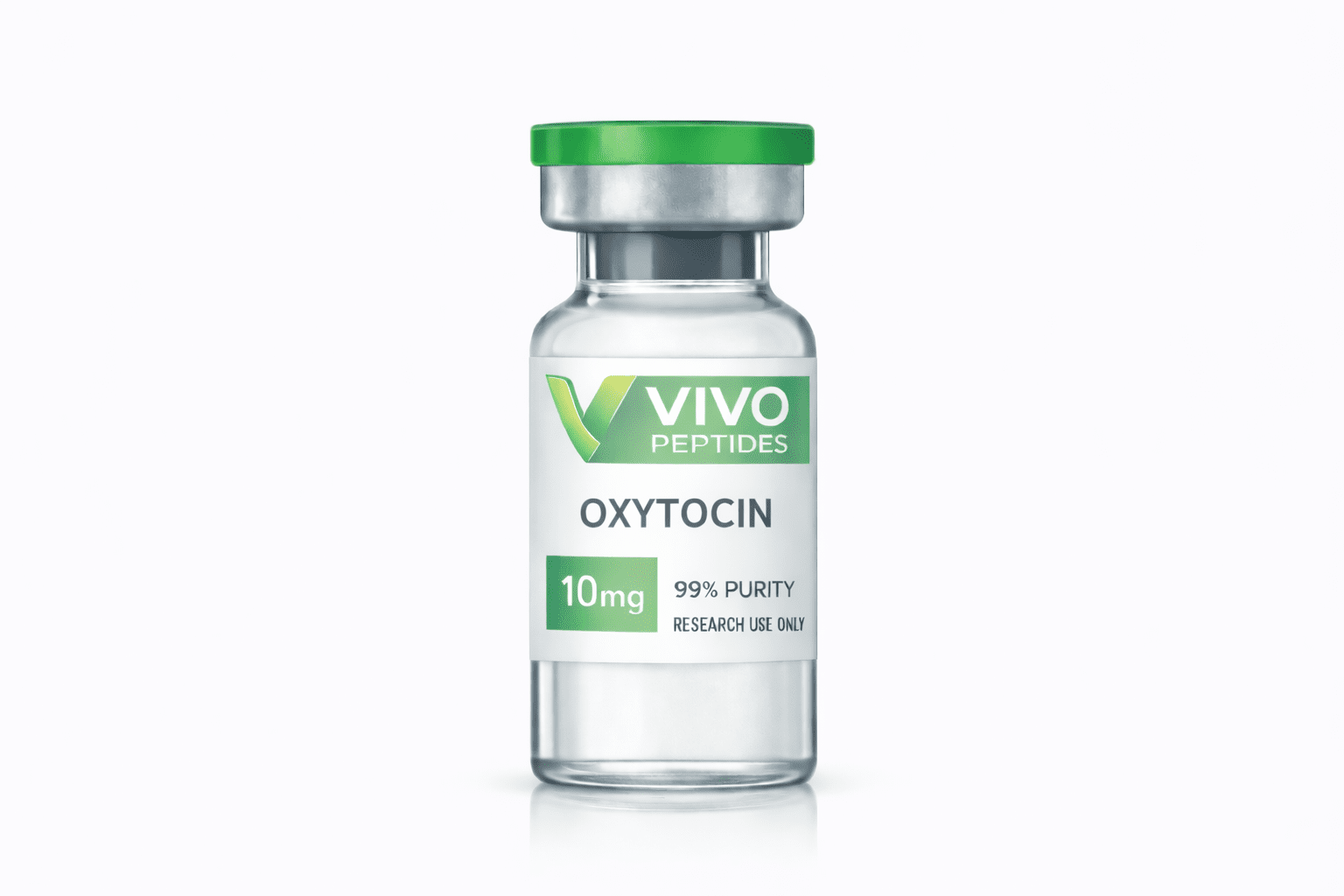
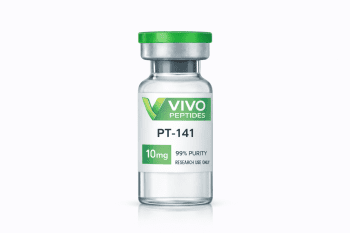
Oxytocin (OXT) is a cyclic nonapeptide that functions as both a peripheral hormone and a central neurotransmitter. Research indicates that its effects are mediated through the oxytocin receptor (OXTR), a G-protein-coupled receptor found in various tissues including the brain, uterus, and mammary glands.
Scientific studies focus on Oxytocin’s ability to modulate social cognition and emotional stability. Preclinical models suggest it can attenuate the stress response by lowering cortisol levels and influencing the amygdala’s activity. Beyond its classical role in parturition (labor) and milk ejection, Oxytocin is currently being explored in research for its potential regenerative effects on aged muscle tissue and its role in metabolic regulation.
Product Specifications:
-
Sequence: Cys-Tyr-Ile-Gln-Asn-Cys-Pro-Leu-Gly-NH2 (Disulfide bridge: Cys1-Cys6)
-
Molecular Formula: C43H66N12O12S2
-
Molecular Weight: 1007.2 g/mol
-
CAS Number: 50-56-6
-
Purity: ≥99% (HPLC)
-
Form: Lyophilized White Powder
Storage & Handling:
Lyophilized Oxytocin is stable at room temperature for short periods but should be stored at -20°C for long-term preservation. Upon reconstitution with bacteriostatic water, the peptide is sensitive to temperature and shear stress; it should be kept refrigerated at 4°C and used within 3-4 weeks. Research protocols emphasize protecting the solution from heat to prevent degradation of the disulfide bridge.
Disclaimer:
All products listed on this website, including Oxytocin, are for laboratory research purposes only. They are not intended for use as drugs, food additives, or cosmetic products. This product is not approved by the FDA for human use and should not be ingested or administered to humans or animals.
FAQ
What is the “love hormone” function in research?
The term “love hormone” refers to Oxytocin’s well-documented role in facilitating social bonding, pair bonding, and maternal attachment in animal models. Research shows it reinforces social memory and trust behaviors via central nervous system pathways.
Is this the same Oxytocin used in hospitals?
No. While the chemical structure is identical, the Oxytocin sold here is lyophilized research-grade material. It is not sterile-filtered for human clinical use (like Pitocin) and is intended strictly for in vitro or animal laboratory experiments.
How does Oxytocin affect stress in studies?
Research indicates that Oxytocin can have an anxiolytic (anti-anxiety) effect. It has been observed to dampen the HPA axis (hypothalamic-pituitary-adrenal) response to stress, thereby reducing the release of cortisol in test subjects.
Why is the disulfide bridge important?
The disulfide bond between the two Cysteine residues (Cys1 and Cys6) creates a cyclic “ring” structure that is essential for the peptide’s biological activity and binding affinity to the oxytocin receptor. Breaking this bond renders the peptide inactive.