
Gonadorelin
$60.00 (USD)
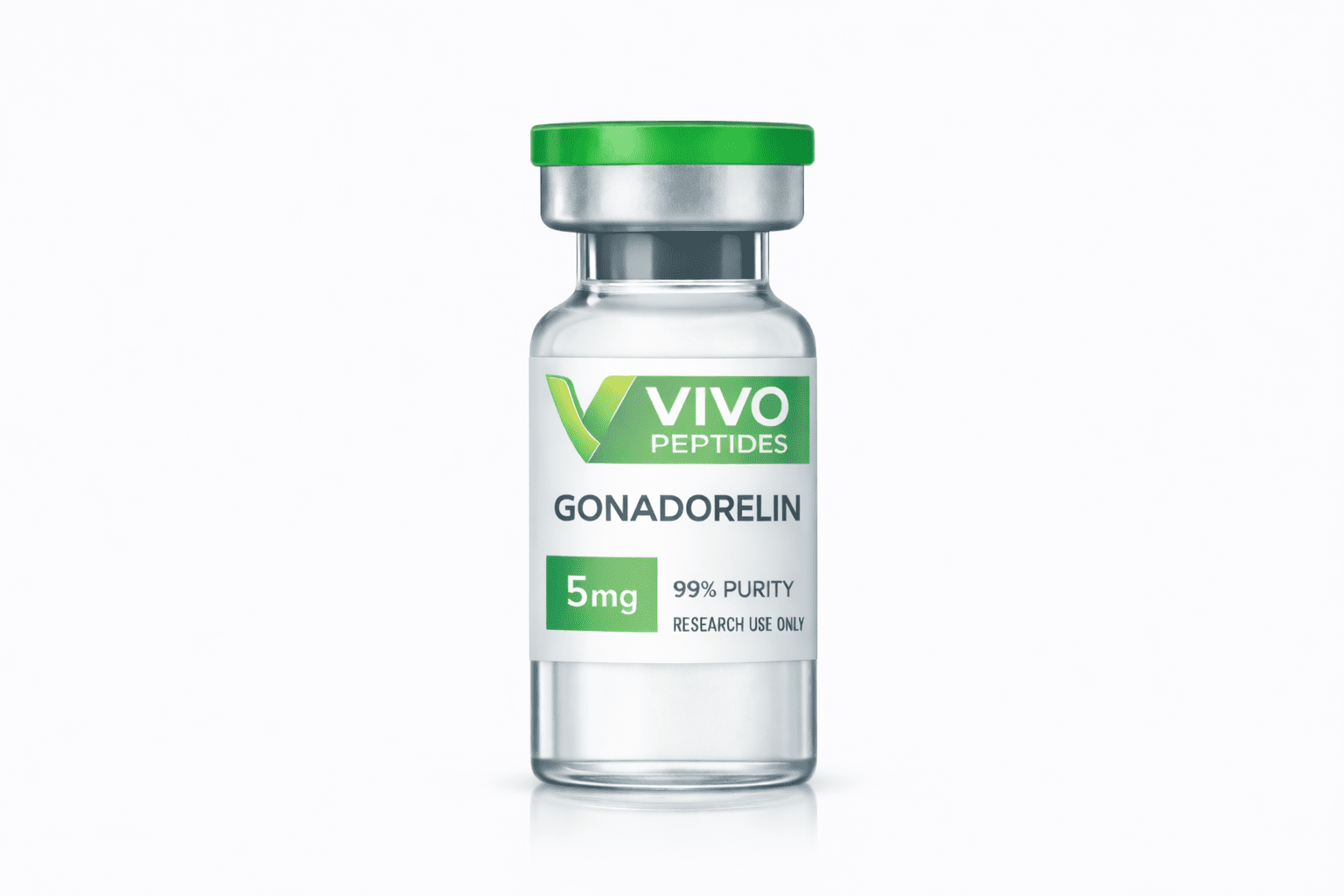
Gonadorelin is a synthetic decapeptide identical to the endogenous Gonadotropin-Releasing Hormone (GnRH).
In research settings, it is utilized to stimulate the anterior pituitary gland to secrete Luteinizing Hormone (LH) and Follicle-Stimulating Hormone (FSH), making it a fundamental tool for investigating the hypothalamic-pituitary-gonadal (HPG) axis, pulsatile hormone regulation, and fertility mechanisms.
Note: This product is intended for research use only and is not for human consumption.
Gonadorelin (also known as GnRH or LHRH) is chemically identical to the natural hormone produced by the hypothalamus. Unlike potent synthetic analogs (like Triptorelin or Leuprolide) which have long half-lives and can cause receptor desensitization (chemical castration) with continuous use, Gonadorelin has a very short half-life (minutes). This characteristic allows researchers to mimic the body’s natural pulsatile release of hormones.
Scientific studies employ Gonadorelin to test the responsiveness of the pituitary gland and to induce spermatogenesis or ovulation in models of hypogonadotropic hypogonadism. By administering the peptide in controlled pulses, researchers can restore or stimulate the natural production of testosterone and sperm without permanently suppressing the HPG axis, a common issue with long-acting analogs.
Product Specifications:
-
Sequence: pGlu-His-Trp-Ser-Tyr-Gly-Leu-Arg-Pro-Gly-NH2
-
Molecular Formula: C55H75N17O13
-
Molecular Weight: 1182.3 g/mol
-
CAS Number: 33515-09-2 (Gonadorelin acetate often cited as 71447-49-9)
-
Purity: ≥99% (HPLC)
-
Form: Lyophilized White Powder
Storage & Handling:
Lyophilized Gonadorelin is stable at room temperature for short periods but should be stored at -20°C for long-term preservation. Upon reconstitution with bacteriostatic water, the peptide is relatively stable if kept refrigerated (2-8°C) and should be used within 3-4 weeks. Due to its rapid enzymatic degradation in biological systems, proper handling during experimental procedures is critical.
Disclaimer:
All products listed on this website, including Gonadorelin, are for laboratory research purposes only. They are not intended for use as drugs, food additives, or cosmetic products. This product is not approved by the FDA for human use and should not be ingested or administered to humans or animals.
FAQ
What is the difference between Gonadorelin and Triptorelin?
Gonadorelin has a very short half-life (~4-10 minutes) and mimics natural GnRH, stimulating LH/FSH release when given in pulses. Triptorelin is a synthetic “super-agonist” with a long half-life that, after an initial spike, causes receptor downregulation and shuts down LH/FSH production (used for chemical castration research).
Why is “pulsatile” administration important in research?
Continuous exposure to GnRH causes the pituitary receptors to desensitize and stop producing hormones. To stimulate sustained testosterone or sperm production in research models, Gonadorelin must often be administered in pulses (e.g., every 90 minutes) to mimic the hypothalamus’s natural rhythm.
Does Gonadorelin increase Testosterone?
In research models with functioning pituitary and testes, the administration of Gonadorelin triggers the release of LH, which signals the Leydig cells in the testes to produce testosterone. It is often used to test if the HPG axis is intact.
Is this peptide stable in solution?
Gonadorelin is moderately stable in bacteriostatic water when refrigerated. Studies suggest it remains stable for at least 30-45 days at 4°C, but freezing the solution after reconstitution is generally not recommended if it can be avoided.
Related Products
Human Chorionic Gonadotropin (HCG) is a peptide hormone primarily produced by the placenta during pregnancy. It plays a vital role in supporting fetal development by stimulating the production of essential hormones such as progesterone, helping maintain a healthy pregnancy.
In research settings, HCG is studied for its potential effects on hormonal regulation, metabolic processes, and physiological responses.
Storage & Handling:
To maintain the stability and integrity of this product, store it in a cool, dry place, away from direct sunlight. Handle with care and follow standard laboratory procedures to ensure accurate and reliable results.
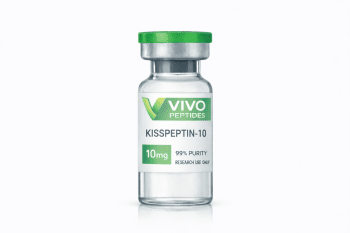
Kisspeptin-10 is a synthetic peptide comprising the bioactive C-terminal decapeptide sequence of the endogenous protein Kisspeptin (metastin).
In research settings, it is a critical tool for investigating the neuroendocrine regulation of the reproductive axis, specifically its ability to stimulate the pulsatile secretion of Gonadotropin-Releasing Hormone (GnRH) via activation of the GPR54 (Kiss1) receptor.
Note: This product is intended for research use only and is not for human consumption.
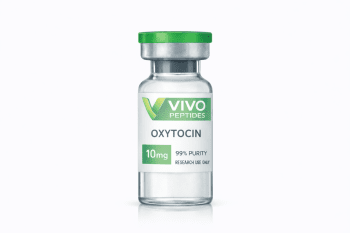
Oxytocin is a nonapeptide hormone naturally produced in the hypothalamus and released by the posterior pituitary.
In research settings, it is widely utilized to investigate the neurobiological mechanisms of social bonding, stress regulation, trust, and maternal behaviors, as well as its physiological role in uterine contraction and lactation.
Note: This product is intended for research use only and is not for human consumption.
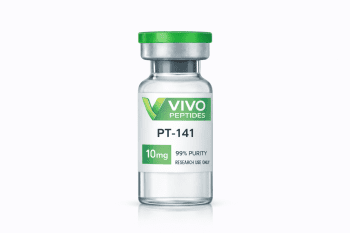
PT-141 (Bremelanotide) is a synthetic cyclic peptide described as an α‑MSH analog and a melanocortin receptor agonist investigated in research models of central melanocortin signaling.
In published preclinical literature, PT-141 is discussed in the context of CNS-mediated melanocortin activity and neurobehavioral endpoints, including sexual-function–related research models.
Disclaimer: All products are intended for laboratory and research use only and are not for human or veterinary consumption.
