
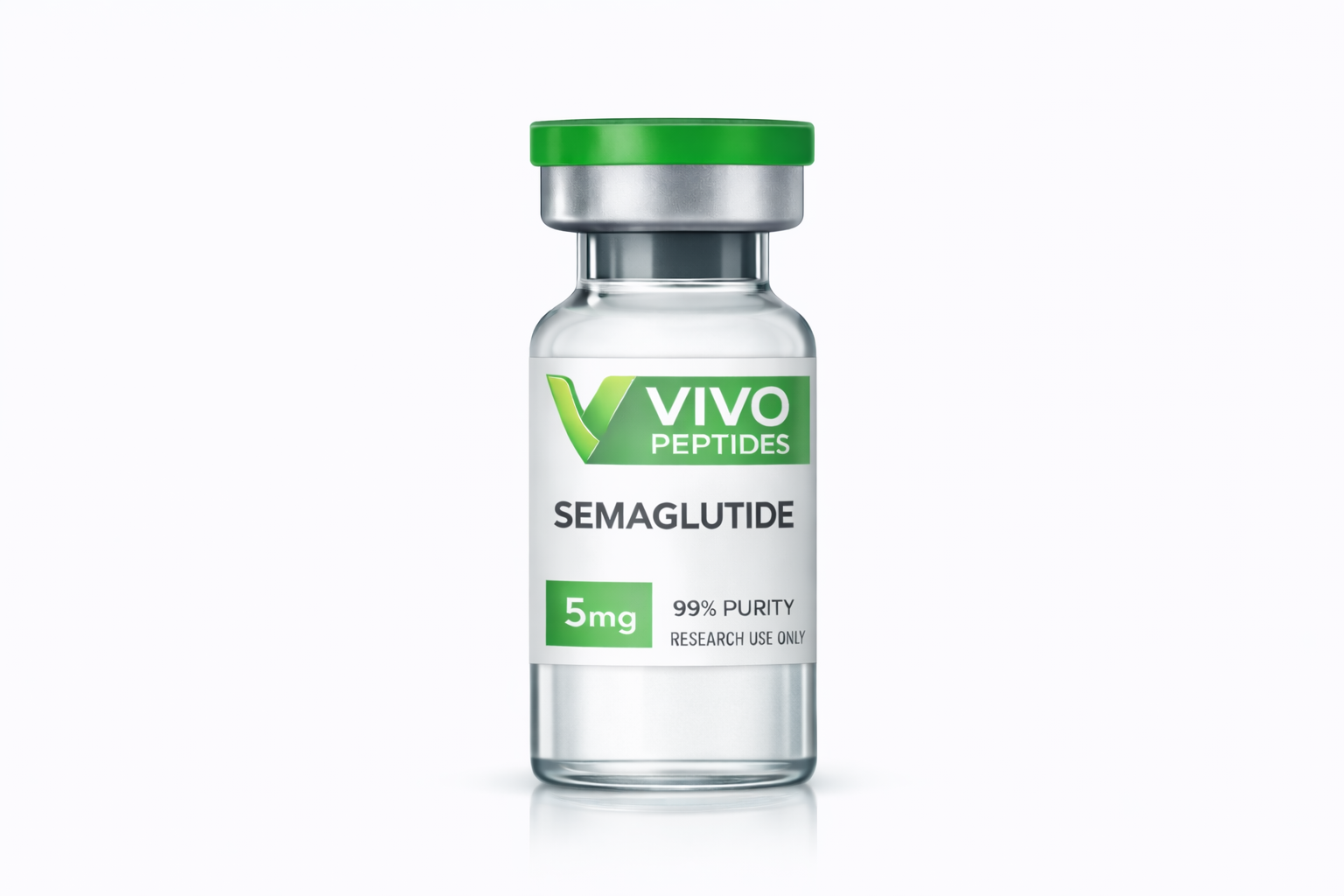
Semaglutide
Price range: $80.00 (USD) through $140.00 (USD)
GLP-1SG is a derivative of the naturally occurring GLP-1, a peptide that has been shown to lower blood sugar levels and enhance insulin secretion. Research shows that GLP-1SG may also improve heart, liver, and lung function while helping to slow or prevent the effects of Alzheimer’s disease. Research with GLP-1SG has shown it can significantly decrease appetite by delaying gastric emptying and reducing intestinal motility. Glucagon-Like Peptide-1 (GLP-1) Analogs have been shown to stimulate insulin and suppress glucagon secretion in a glucose-dependent manner.
Size: 5mg / 10mg
Contents: GLP-1SG
Form: Lyophilized powder
Purity: >99%
Perhaps the most important effect that GLP-1 has, according to Dr. Holst, is referred to as the “incretin effect.” Incretins are a group of metabolic hormones, released by the GI tract, that cause a decrease in blood glucose (sugar) levels. GLP-1 has been shown to be one of the two most important hormones (the other being GIP) to stimulate the incretin effect in rodent models. Though GIP circulates at levels roughly 10 times higher than that of GLP-1, there is evidence that GLP-1 is the more potent of the two molecules, particularly when levels of blood glucose are quite high.
A GLP-1 receptor has been identified on the surface of pancreatic beta cells, making it clear that GLP-1 directly stimulates the exocytosis of insulin from the pancreas. When combined with sulfonylurea drugs, GLP-1 has been shown to boost insulin secretion enough to cause mild hypoglycemia in up to 40% of subjects. Of course, increased insulin secretion is associated with a number of trophic effects including increased protein synthesis, reduction in the breakdown of protein, and increased uptake of amino acids by skeletal muscle.
GLP-1 and Beta Cell Protection
Research in animal models suggests that GLP-1 can stimulate the growth and proliferation of pancreatic beta cells and that it may stimulate the differentiation of new beta cells form progenitors in the pancreatic duct epithelium. Research has also shown that GLP-1 inhibits beta cell apoptosis. Taken in sum, these effects tip the usual balance of beta cell growth and death toward growth, suggesting that the peptide may be useful in treating diabetes and in protecting the pancreas against insult that harms beta cells.In one particularly compelling trial, GLP-1 was shown to inhibit the death of beta cells caused by enhanced levels of inflammatory cytokines. In fact, mouse models of type 1 diabetes have revealed that GLP-1 protects islet cells from destruction and may, in fact, be a useful means of preventing onset of the type 1 diabetes.
GLP-1 and Appetite
Research in mouse models suggests that administration of GLP-1, and its similar cousin GLP-1, into the brains of mice can reduce the drive to eat and inhibit food intake. It appears that GLP-1 may actually enhance feelings of satiety, helping individuals to feel fuller and reducing hunger indirectly. Recent clinical studies have shown in mice that twice daily administration of GLP-1 receptor agonists cause gradual, linear weight loss. Over a long period, this weight loss is associated with significant improvement in cardiovascular risk factors and a reduction in hemoglobin A1C levels, the latter of these being a proxy marker for the severity of diabetes and the quality of blood sugar control attained via treatment.
Potential Cardiovascular Benefits of GLP-1
It is now know that GLP-1 receptors are distributed throughout the heart and act to improve cardiac function in certain settings by boosting heart rate and reducing left ventricular end-diastolic pressure. The latter may not seem like much, but increased LV end-diastolic pressure is associated with LV hypertrophy, cardiac remodeling, and eventual heart failure.Recent evidence has even suggested that GLP-1 could play role in decreasing the overall damaged caused by a heart attack. It appears that the peptide improves cardiac muscle glucose uptake, thereby helping struggling ischemic heart muscle cells to get the nutrition they need to continue functioning and avoid programmed cell death. The increase in glucose uptake in these cells appears to independent of insulin. Large infusions of GLP-1 into dogs have been shown to improve LV performance and reduce systemic vascular resistance. The latter effect can help to reduce blood pressure and ease strain on the heart as a result. This, in turn, can help to reduce the long-term consequences of high blood pressure such as LV remodeling, vascular thickening, and heart failure. According to Dr. Holst, administration of GLP-1 following cardiac injury has “constantly increased myocardial performance both in experimental animal models and in patients.”
GLP-1 and the Brain
There is some evidence to suggest that GLP-1 can improve learning and help to protect neurons against neurodegenerative diseases such as Alzheimer’s disease. In one study, GLP-1 was shown to enhance associative and spatial learning in mice and even to improve learning deficits in mice with specific gene defects. In rats that over-express the GLP-1 receptor in certain regions of the brain, learning and memory are both significantly better than in their normal controls. Additional research in mice has shown that GLP-1 can help to protect against excitotoxic neuron damage, completely protecting rat models of neurodegeneration against glutamate-induced apoptosis. The peptide can even stimulate neurite outgrowth in cultured cells. Researchers are hopeful that additional research on GLP-1 will reveal how it might be used to halt or reverse certain neurodegenerative diseases. Interestingly, GLP-1 and its analogue exendin-4 have been shown in mouse models to reduce levels of amyloid-beta in the brain as well as the beta-amyloid precursor protein found in neurons. Amyloid beta is the primary component of the plaques observed in Alzheimer’s disease, plaques which, while not necessarily known to be causative, are associated with the severity of the disease. It remains to be seen if preventing amyloid beta accumulation can protect against the effects of Alzheimer’s disease, but this research is, at the very least, a tantalizing clue as to how scientists my intervene in the progression of mild cognitive impairment to full Alzheimer’s disease. GLP-1 exhibits minimal to moderate side effects, low oral and excellent subcutaneous bioavailability in mice. Per kg dosage in mice does not scale to humans. GLP-1 for sale at Vivo Peptides is limited to educational and scientific research only, not for human consumption. Only buy GLP-1 if you are a licensed researcher.
Frequently Asked Questions About GLP-1SG
What is GLP-1SG ?
GLP-1SG is a GLP-1 (Glucagon-Like Peptide-1) receptor agonist used in metabolic and endocrine research. It’s a 31-amino acid peptide designed to study glucose regulation and appetite control mechanisms.
What purity is your research-grade GLP-1SG ?
Our GLP-1SG is USA-manufactured with >99% purity, verified through third-party HPLC and mass spectrometry testing. COA available upon request for each batch.
What dosage options are available?
We offer GLP-1SG in research dosages of 5mg and 10mg vials to accommodate various research protocol requirements and study designs.
How should GLP-1SG be stored?
Store lyophilized GLP-1SG at -20°C for long-term storage (up to 2 years). Once reconstituted, refrigerate at 2-8°C and use within 30 days. Do not freeze after reconstitution.
What is the proper reconstitution protocol for GLP-1SG ?
Add 2ml of bacteriostatic water to achieve a concentration of 2.5mg/ml (for 5mg vial) or 5mg/ml (for 10mg vial). Inject water slowly, allow to dissolve naturally without shaking (3-5 minutes).
What is GLP-1SG molecular weight?
GLP-1SG has a molecular weight of approximately 4113.64 g/mol with the molecular formula C187H291N45O59.
How does GLP-1SG compare to GLP-2TZ in research?
GLP-1SG is a selective GLP-1 receptor agonist, while GLP-2TZ is a dual GIP/GLP-1 agonist. Both are valuable for metabolic research but offer different receptor activation profiles.
What research areas commonly use GLP-1SG ?
GLP-1SG is used in GLP-1 pathway research, glucose homeostasis studies, appetite regulation investigations, insulin secretion research, and metabolic syndrome studies.
Is GLP-1SG light-sensitive?
Yes, GLP-1SG should be protected from light exposure both in lyophilized and reconstituted forms. Store in original vial or amber-colored containers to maintain stability.
What is the shelf life of reconstituted GLP-1SG ?
When properly reconstituted with bacteriostatic water and stored at 2-8°C, GLP-1SG maintains stability for approximately 30 days. Always label with reconstitution date.
Related Products
Buy Cagrilintide Online
Cagrilintide is a long-acting amylin analogue, currently at the forefront of peptide research due to its rather interesting potential beneficial effect in individuals with diabetes. But what’s so special about amylin? Well, amylin is another peptide hormone, co-secreted with insulin, which inhibits food intake, delays gastric emptying, and, most importantly, reduces blood glucose levels.
Back to cagrilintide… it was originally developed to improve on the initial amylin analogue called pramlintide. The problem with pramlintide is its short half-life and undesired side effects.
Cagrilintide was (and still is being) developed to alter the half-life, potency and stability of pramlintide, and other amylin analogues.Since, it’s still a relatively new peptide, it still needs to undergo further research so we can make sure its as effective and safe.
Melanotan 2 (MT-2) is a synthetic cyclic heptapeptide analogue of the endogenous alpha-melanocyte-stimulating hormone (α-MSH).
In research settings, it is widely utilized to investigate the melanocortin system’s role in regulating skin pigmentation (melanogenesis), sexual behavior, and energy homeostasis (appetite suppression) through non-selective activation of melanocortin receptors.
Note: This product is intended for research use only and is not for human consumption.
AOD9604 is a derivative of human growth hormone (hGH) and a modified version of the hGH fragment 176-191 peptide, incorporating a di-sulfide bridge. What’s exciting about this peptide is that it does not affect IGF-1 or insulin levels and is, therefore, not a risk in promoting glucose intolerance.
Sermorelin (GHRH 1-29) is a synthetic peptide analogue of the endogenous growth hormone-releasing hormone (GHRH). It consists of the first 29 amino acids of the native neurohormone and retains full biological activity in stimulating the pituitary gland.
In research settings, Sermorelin is utilized to study the regulation of pulsatile growth hormone (GH) secretion and the feedback mechanisms of the hypothalamic-pituitary-somatotropic axis.
Note: This product is intended for research use only and is not for human consumption.
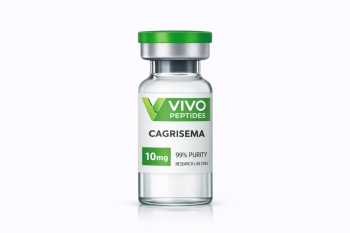
Cagrisema is a potent new blend, a combination that integrates two peptides – cagrilintide and semaglutide.
Semaglutide is a GLP-1 receptor agonist; a version of human GLP-1 hormone, modified to resist the degradation by the enzyme dipeptidyl peptidase-4.
Cagrilintdide, on the other hand, is an amylin analogue. Its role is to mimic the human hormone amylin and is structurally designed to be resistant to enzymatic degradation.
Together, these two peptides profoundly influence chemical structures and induce hormonal changes:
- Leading to the receptor changes within the pancreas and the brain
- Boosting insulin secretion
- Interacting with the receptors involved in appetite regulation
- Mimicking the action of amylin
- Decreasing glucagon secretion
All in all, this is a sophisticated, more importantly, incredibly potent combination of two peptides whose actions complement each other. Cagrisema combination influences some key hormonal processes and plays a role in metabolic regulation.
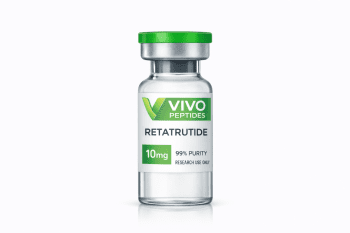
GLP-3RT is an investigational multi-receptor agonist peptide designed to target multiple metabolic hormone pathways involved in appetite, energy expenditure, and glucose regulation.
It is most often described as a next-generation approach to weight-management research due to its combined incretin and glucagon-pathway activity.
This injectable peptide is primarily referenced in the context of clinical development and advanced metabolic research.
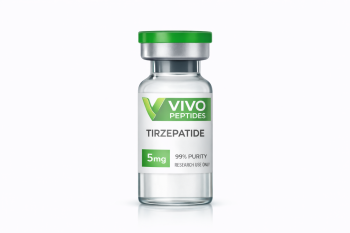
GLP-2TZ is a synthetic peptide investigated and used clinically for its incretin-based metabolic activity, designed to activate key pathways involved in glycemic control and appetite regulation.
As a dual incretin receptor agonist (GIP/GLP‑1), it is associated with clinically meaningful effects on body weight and metabolic markers in studied populations.
This injectable peptide is typically positioned for advanced metabolic research where receptor-driven appetite and glucose signaling are the primary focus.
