
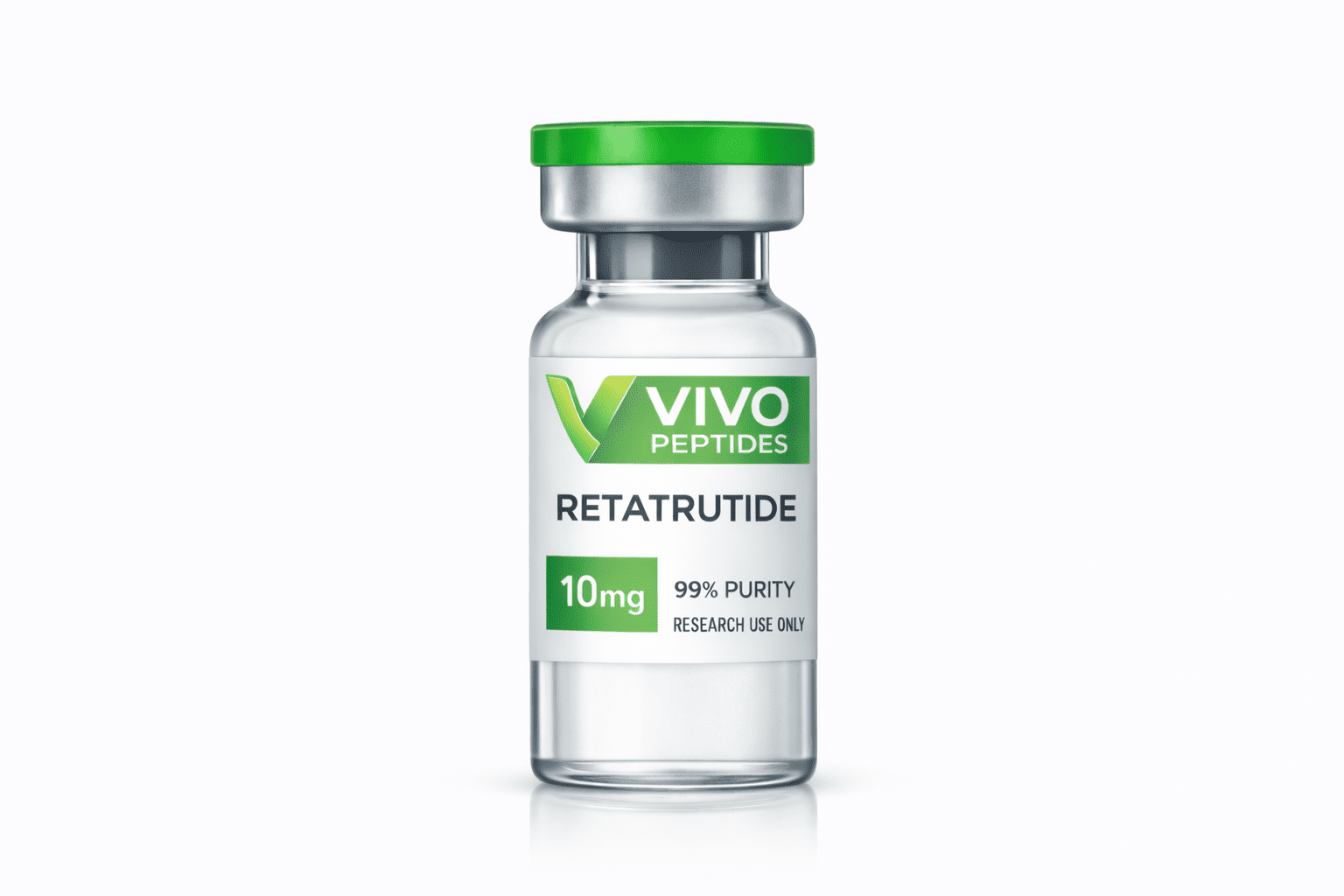
Retatrutide
$160.00 (USD)
GLP-3RT is an investigational multi-receptor agonist peptide designed to target multiple metabolic hormone pathways involved in appetite, energy expenditure, and glucose regulation.
It is most often described as a next-generation approach to weight-management research due to its combined incretin and glucagon-pathway activity.
This injectable peptide is primarily referenced in the context of clinical development and advanced metabolic research.
Retatrutide overview
GLP-3RT is a clinical-stage peptide engineered to activate multiple receptors relevant to metabolic control, commonly characterized as a tri-agonist approach (GIP/GLP‑1/glucagon).
This multi-pathway design aims to address weight and metabolic outcomes through complementary mechanisms rather than a single hormonal signal.
Weight and metabolism research
Early and mid-stage clinical development has focused on weight reduction magnitude, body composition trends, and broad cardiometabolic marker changes observed during treatment periods.
Because glucagon-pathway activity may influence energy expenditure and lipid metabolism, GLP-3RT is frequently discussed as a distinct category compared with dual incretin agonists.
Status and safety note
GLP-3RT remains investigational in many regions, so claims should be framed as “under investigation” and avoid implying approved therapeutic use.
As with all bioactive peptides, marketing text should avoid instructions for preparation, dosing, or administration and should stay within research-description boundaries.
Frequently Asked Questions About GLP-3RT
What is GLP-3RT ?
GLP-3RT is a triple agonist peptide that activates GIP, GLP-1, and glucagon receptors. It’s used in advanced metabolic research studying multi-pathway incretin and glucagon receptor activation for weight regulation and metabolic function.
What purity level is your GLP-3RT ?
Our research-grade GLP-3RT is USA-manufactured with >99% purity, verified through third-party HPLC and mass spectrometry testing. COA available upon request.
What vial sizes are available for GLP-3RT ?
We offer GLP-3RT in multiple research dosages including 5mg, 10mg, and 15mg vials to accommodate different research protocol requirements.
How should GLP-3RT be stored?
Store lyophilized GLP-3RT at -20°C to -80°C for long-term storage. Once reconstituted with bacteriostatic water, store at 2-8°C and use within 28 days for optimal stability.
How do you reconstitute GLP-3RT ?
For a 10mg vial, add 2ml of bacteriostatic water to achieve a 5mg/ml concentration. Inject water slowly along the vial wall, swirl gently without shaking, and allow 2-5 minutes to fully dissolve.
How does GLP-3RT differ from GLP-2TZ?
GLP-3RT is a triple agonist (GIP/GLP-1/Glucagon), while GLP-2TZ is a dual agonist (GIP/GLP-1). The addition of glucagon receptor activation provides unique research opportunities in studying energy expenditure mechanisms.
What makes GLP-3RT unique in metabolic research?
GLP-3RT triple-agonist mechanism allows researchers to study the combined effects of incretin hormones and glucagon activation, offering insights into comprehensive metabolic pathway interactions.
What research applications utilize GLP-3RT ?
GLP-3RT is used in advanced metabolic research, multi-pathway receptor studies, energy expenditure investigations, glucose homeostasis research, and comparative triple-agonist mechanism studies.
Is GLP-3RT stable after reconstitution?
When reconstituted with bacteriostatic water and stored at 2-8°C, GLP-3RT maintains stability for up to 28 days. Protect from light and avoid freeze-thaw cycles.
Can GLP-3RT be shipped internationally?
Yes, we offer international shipping for research institutions. GLP-3RT is shipped with appropriate cold chain packaging to maintain stability during transit.
Related Products
Melanotan 2 (MT-2) is a synthetic cyclic heptapeptide analogue of the endogenous alpha-melanocyte-stimulating hormone (α-MSH).
In research settings, it is widely utilized to investigate the melanocortin system’s role in regulating skin pigmentation (melanogenesis), sexual behavior, and energy homeostasis (appetite suppression) through non-selective activation of melanocortin receptors.
Note: This product is intended for research use only and is not for human consumption.
GLP-2TZ is a synthetic peptide investigated and used clinically for its incretin-based metabolic activity, designed to activate key pathways involved in glycemic control and appetite regulation.
As a dual incretin receptor agonist (GIP/GLP‑1), it is associated with clinically meaningful effects on body weight and metabolic markers in studied populations.
This injectable peptide is typically positioned for advanced metabolic research where receptor-driven appetite and glucose signaling are the primary focus.
GLP-1SG is a derivative of the naturally occurring GLP-1, a peptide that has been shown to lower blood sugar levels and enhance insulin secretion. Research shows that GLP-1SG may also improve heart, liver, and lung function while helping to slow or prevent the effects of Alzheimer’s disease. Research with GLP-1SG has shown it can significantly decrease appetite by delaying gastric emptying and reducing intestinal motility. Glucagon-Like Peptide-1 (GLP-1) Analogs have been shown to stimulate insulin and suppress glucagon secretion in a glucose-dependent manner.
Size: 5mg / 10mg
Contents: GLP-1SG
Form: Lyophilized powder
Purity: >99%
Hospira bacteriostatic water is sold in vials of 30ml (individually or in bulk). Bacteriostatic water is sterile, non-pyrogenic, it comes in multiple-dose containers and uses 0.9% (9mg/mL) benzyl alcohol, which serves as a bacteriostatic preservative.
Bacteriostatic water is used for:
- Medication dilution – this is its most common application as it is used to dilute medication prior to use. Mainly, bacteriostatic water is intended for subcutaneous, intramuscular, and intravenous drug administration, following the addition of drugs that require reconstitution.
- Medication reconstitution – medication that’s in a so-called powder state (lyophilized – stripped of water) has to be mixed with a solvent before application. Bacteriostatic water is the preferred choice for a drug solvent due to its bacteriostatic properties and multi-draw ability.
- Multiple dosage injection – due to its properties, bacteriostatic water is perfect for medication administered over a number of days, as it will keep the drug safe and ensure the vial’s sterility over time.
Product Highlights:
- Comes in a 30ml sterile vial
- Allows multiple uses over the course of 28 days
- Contains 0.9% benzyl alcohol solution
- Adheres to USP regulatory standards
- Features a tamper-proof cap for added safety
Precaution:
Though bacteriostatic water allows for multiple, safe draws, you should use it within 28 days of opening it. If you fail to use it within the 28-day window, you must discard it, as it’s no longer safe to use (even if you’ve kept it under the recommended conditions).
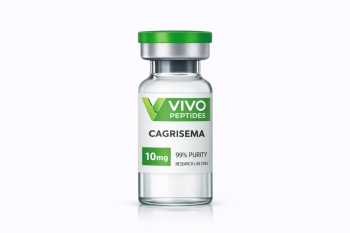
Cagrisema is a potent new blend, a combination that integrates two peptides – cagrilintide and semaglutide.
Semaglutide is a GLP-1 receptor agonist; a version of human GLP-1 hormone, modified to resist the degradation by the enzyme dipeptidyl peptidase-4.
Cagrilintdide, on the other hand, is an amylin analogue. Its role is to mimic the human hormone amylin and is structurally designed to be resistant to enzymatic degradation.
Together, these two peptides profoundly influence chemical structures and induce hormonal changes:
- Leading to the receptor changes within the pancreas and the brain
- Boosting insulin secretion
- Interacting with the receptors involved in appetite regulation
- Mimicking the action of amylin
- Decreasing glucagon secretion
All in all, this is a sophisticated, more importantly, incredibly potent combination of two peptides whose actions complement each other. Cagrisema combination influences some key hormonal processes and plays a role in metabolic regulation.
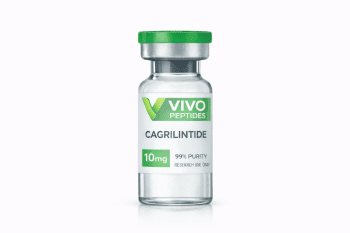
Buy Cagrilintide Online
Cagrilintide is a long-acting amylin analogue, currently at the forefront of peptide research due to its rather interesting potential beneficial effect in individuals with diabetes. But what’s so special about amylin? Well, amylin is another peptide hormone, co-secreted with insulin, which inhibits food intake, delays gastric emptying, and, most importantly, reduces blood glucose levels.
Back to cagrilintide… it was originally developed to improve on the initial amylin analogue called pramlintide. The problem with pramlintide is its short half-life and undesired side effects.
Cagrilintide was (and still is being) developed to alter the half-life, potency and stability of pramlintide, and other amylin analogues.Since, it’s still a relatively new peptide, it still needs to undergo further research so we can make sure its as effective and safe.
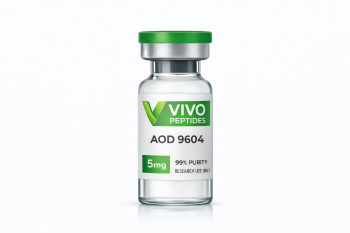
AOD9604 is a derivative of human growth hormone (hGH) and a modified version of the hGH fragment 176-191 peptide, incorporating a di-sulfide bridge. What’s exciting about this peptide is that it does not affect IGF-1 or insulin levels and is, therefore, not a risk in promoting glucose intolerance.
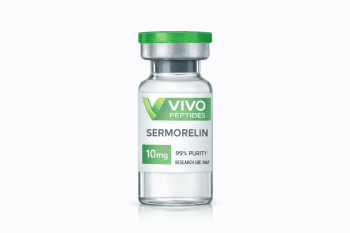
Sermorelin (GHRH 1-29) is a synthetic peptide analogue of the endogenous growth hormone-releasing hormone (GHRH). It consists of the first 29 amino acids of the native neurohormone and retains full biological activity in stimulating the pituitary gland.
In research settings, Sermorelin is utilized to study the regulation of pulsatile growth hormone (GH) secretion and the feedback mechanisms of the hypothalamic-pituitary-somatotropic axis.
Note: This product is intended for research use only and is not for human consumption.
